
Allen-Bradley - 12 mm Barrel Inductive Prox Se - 872C-NH8NP12-E2
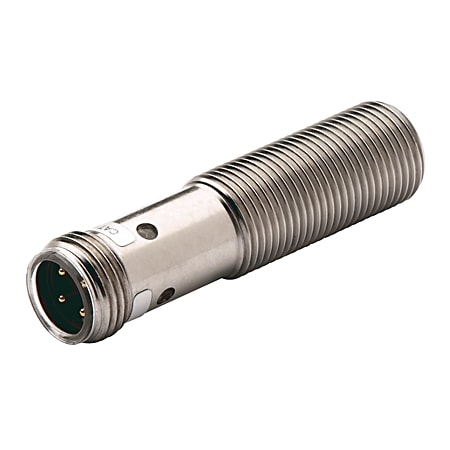
par PC
45.70 CHF
Livraison
Spécificités essentielles
distance de commutation - 8 mm
finition de la fonction de commutation - contact à fermeture (NO)
revêtement du boîtier - nickelé
tension d’alimentation - 24...24 V
diamètre du capteur - 12 mm
Conditionnement
1 PC
EAN
10662074945884
Réf. Routeco
872C-NH8NP12-E2
Réf. Fournisseur
872C-NH8NP12-E2
Réf. Commerciale
872C-NH8NP12-E2
distance de commutation:
8 mm
finition de la fonction de commutation:
contact à fermeture (NO)
revêtement du boîtier:
nickelé
tension d’alimentation:
24...24 V
diamètre du capteur:
12 mm
finition de la sortie de commutation:
PNP
finition du raccordement électrique:
câble
type d'activation:
cible métallique
type de construction du boîtier:
cylindre, filetage
courant de sortie max. au niveau de la sortie protégée:
200 mA
tension d'alimentation de courant nominal CC:
10...30 V
type de tension:
DC
fréquence de commutation:
1300 Hz
matériau du boîtier/corps:
métal
Proximity Sensor, 3-Wire DC, Extended Range Short Barrel, 12mm Diameter, Tubular:Nickel Plated Brass, Short, 8mm Sensing Distance, Unshielded, N.O., Source (PNP) Output, PVC Cable (5 Cond)
- 10…30V DC Operating voltage
- 6.5 mm (smooth barrel)
- 8 mm, 12 mm, 18 mm, and 30 mm (threaded barrel)
- Shielded and unshielded versions (6.5 mm shielded only, 8 mm unshielded only)
- Up to three times the sensing range of standard range inductive sensors
- PNP or NPN units (all units normally open)
- 3-pin Pico QD or 4-pin micro QD connectors
- -25...+70˚ C operating temperature
- IP67 enclosure rating
- Short circuit, false pulse, reverse polarity and transient noise protection
- cULus and CE marked for applicable directives
- The most common cause of sensor failure is contact with the intended target. Sensors with a longer range can be used to eliminate and/or limit contact with the target, thus reducing the cost associated with replacing damaged sensors (cost of the sensor, maintenance time, and lost production).
- Achieve the same sensing range with a smaller sensor. Smaller diameter
- sensors may be a superior physical fi t for your application. Additionally,
- you may now be able to use a sensor in a previously inaccessible area.
- Solve previously unsolvable applications, especially in diffi cult environments where other sensors may not be reliable.